What colour variety actually indicates
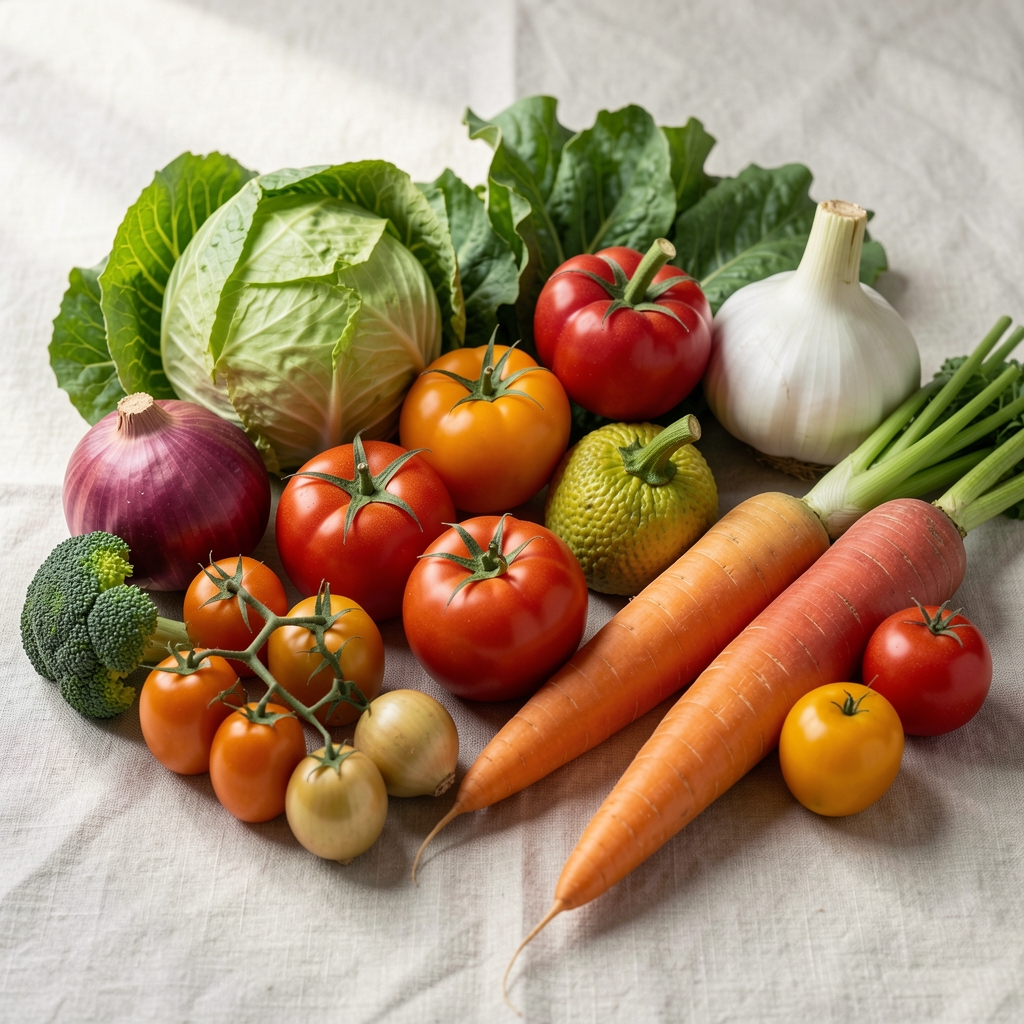
The chromatic diversity of vegetables on a plate is, in practical terms, a useful shorthand for a broader dietary principle. Dark leafy greens, orange-fleshed root vegetables, deep-red tomatoes and peppers, purple cabbages, pale-green courgettes — each carries a distinct set of naturally occurring compounds that complement one another in ways that are still being documented in published research.
What is less frequently discussed is the degree to which this variety emerges not from deliberate planning but from the accumulated habits of experienced home cooks. Observations across a range of London households suggest that people who have been cooking for themselves for more than five years tend to reach for colour variety almost automatically — without referring to nutritional guidance or following a structured programme.
The mechanism appears to be sensory rather than intellectual. A plate that looks varied tends to look more finished, more considered. It presents well to the eye before it reaches the palate. This aesthetic intuition, it turns out, aligns closely with what nutritional research describes as a well-composed meal.
The seasonal dimension of colour practice
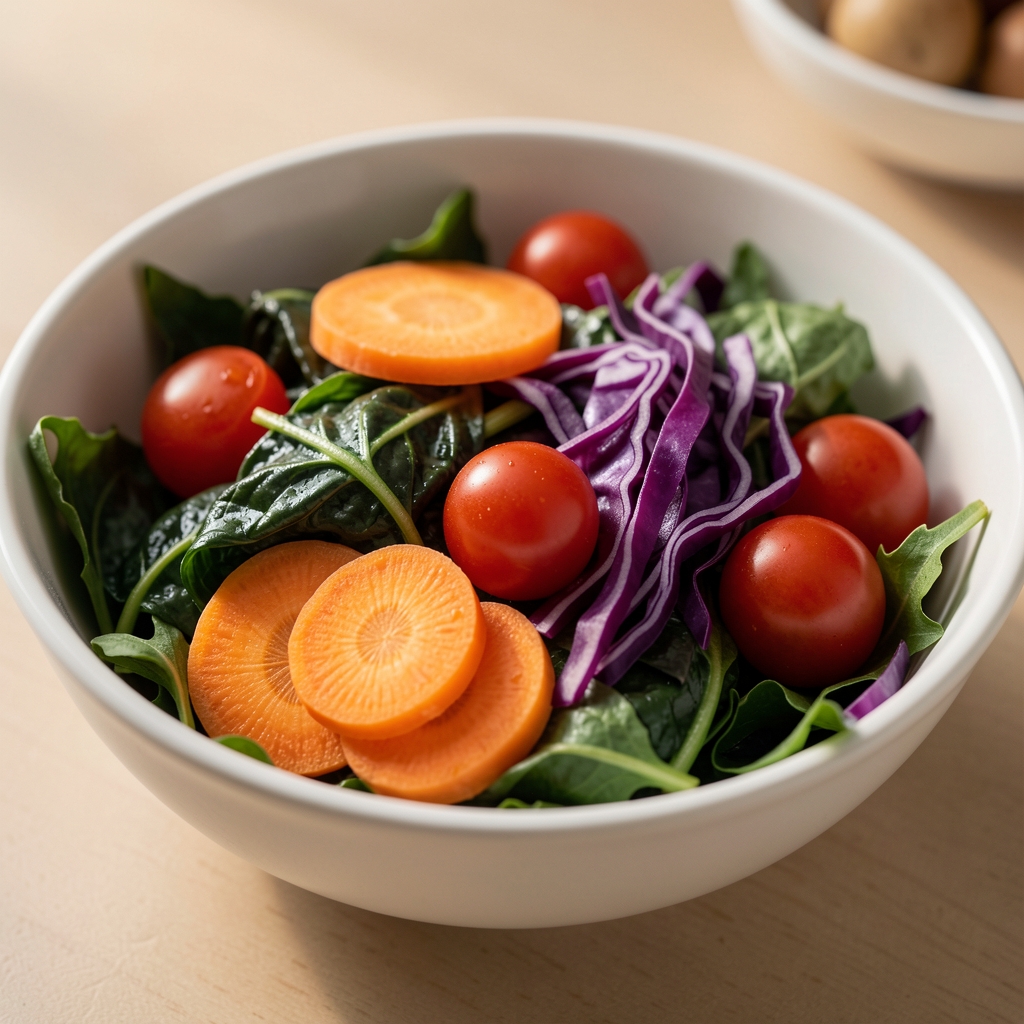
Seasonal cooking introduces a natural rotation mechanism into colour variety. What is available at a given time of year changes the palette on the plate. Late-summer kitchens tend to feature reds, yellows, and deep purples — aubergines, tomatoes, sweet peppers, summer squash. Autumn shifts the range toward oranges and earthy greens — squash, kale, chard, celeriac.
This seasonal rotation, even when followed without intention — by simply buying what looks fresh and affordable at the market — produces a form of dietary variety across the year that a fixed weekly menu would not. The nutritional argument for seasonal cooking rests partly on this: not that summer tomatoes contain more of a specific compound, but that eating seasonally prevents the repetition that a fixed plan enforces.
Repeated observation of London food markets between October 2025 and February 2026 noted a consistent shift in what experienced shoppers placed in their baskets as the season changed. Very few were consulting lists. Most were responding to what looked best, what was priced sensibly, and what they hadn't purchased in several weeks.
"The most durable eating practices are not those that follow a programme. They are those that make sensory sense — that feel right to the eye before they are evaluated by any other measure."
Portion composition and the balanced meal
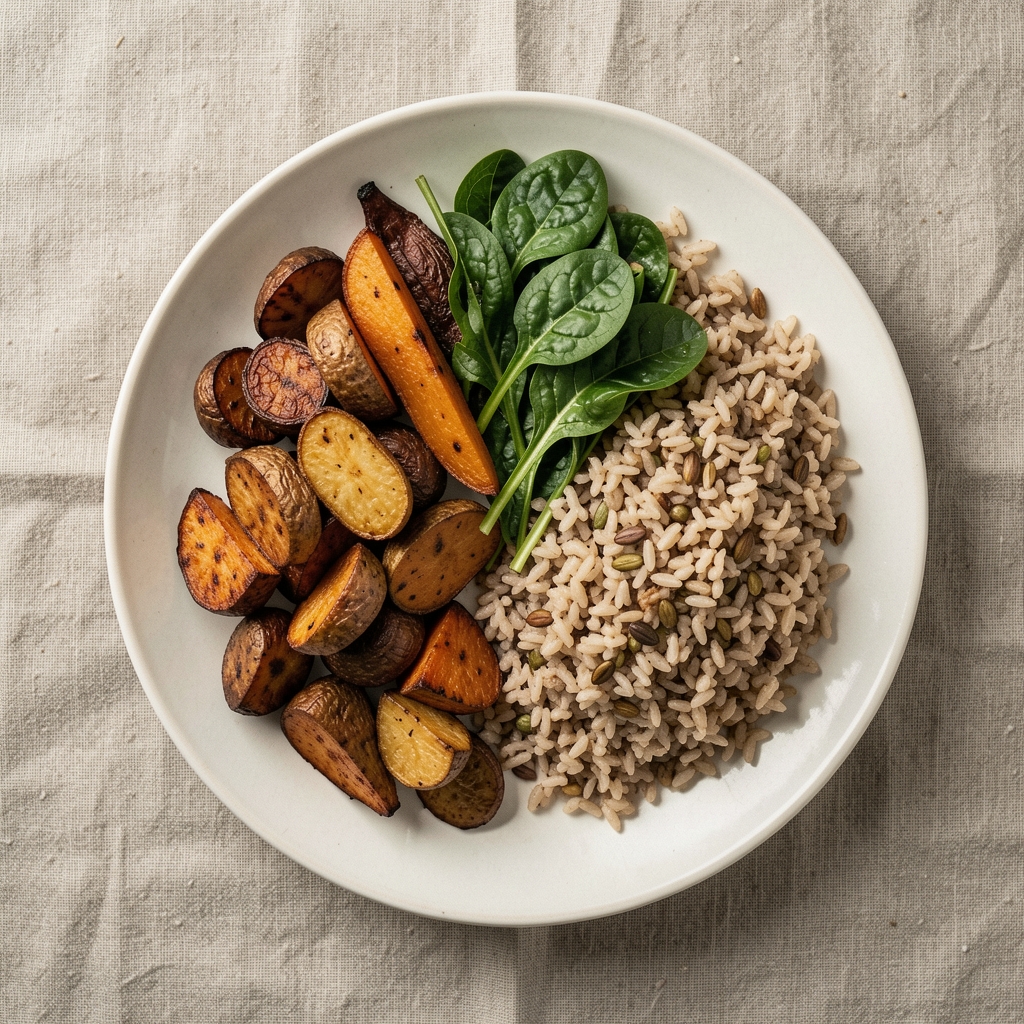
The distribution of food across a plate — proportions of protein, carbohydrate, and plant-based components — is a second dimension of meal composition that operates alongside colour variety. Published research in the area of portion awareness suggests that visual feedback from a well-balanced plate is one of the more reliable cues for appropriate portion sizes, independent of calorie counting or macro tracking.
The observation here is straightforward: when a plate carries a large proportion of vegetables relative to other components, the overall caloric density of the meal tends to be lower, even when the plate appears full. The visual satisfaction of a varied, colourful plate functions as a kind of built-in portion management mechanism — one that does not require deliberate calculation.
Among the home cooks observed in this entry, portion control was rarely discussed in explicit terms. The language used was more often about balance — "it looks right", "I didn't want it too heavy", "it needed something green". This register of sensory and aesthetic judgement is, in the view of this publication, a more sustainable basis for consistent eating practices than numerical targets.
Nutritionist guidance as a starting reference, not a rule
It is worth acknowledging the role that qualified nutrition professionals play in establishing baseline frameworks. The dietary models that most experienced home cooks have internalised — however informally — often trace back to guidance circulated through public health communications over the past two decades. The NHS Eatwell Guide, for instance, has become a visual reference that many people can roughly recall without having studied it directly.
What is notable is how this generalised guidance has been absorbed into practical habits rather than applied as a strict rule. The model is used as an orienting frame — a rough sense of what a balanced meal might look like — rather than as a daily guideline. The gap between formal nutritionist guidance and actual home-cooking behaviour is bridged not by rigorous adherence but by gradual approximation over time.
This is not a criticism of either the guidance or the cook. It is simply an observation about how nutritional frameworks function in everyday practice: as points of reference that shape intuition, rather than as algorithms that govern decisions.
The weight management question in plain terms
Weight management is a topic that surrounds everyday nutrition writing with considerable noise. Much of that noise involves claims that go well beyond what published research supports. This publication's position is to note what is reasonably well-evidenced without amplifying overclaimed conclusions.
What the evidence suggests, in plain terms: consistent patterns of varied vegetable intake, measured portion compositions, and regular physical activity are associated with sustained weight stability across large population studies. These associations are not guarantees, and they operate over months and years rather than weeks.
The takeaway for everyday practice is modest: a plate with wide colour variety and appropriate proportions is not a weight management intervention in any specialistly significant sense. It is simply a reasonable pattern of eating that, repeated over time, appears to support stable body composition in most circumstances. That is enough.
Key observations from this entry
- Colour variety in vegetables tends to emerge from sensory and aesthetic judgement rather than deliberate planning in experienced home cooks.
- Seasonal shopping introduces a natural rotation that prevents the repetition a fixed weekly menu would produce.
- Visual balance on a plate is a practical proxy for portion awareness — one that does not require numerical calculation.
- Formal nutritional guidance functions best as an orienting frame, not a strict daily rule.
- Consistent, varied eating patterns are associated with weight stability over long time periods — not as a rapid intervention but as a durable background practice.